When we tell people in the food industry that we don't have a freezer in our kitchen, they look at us like we told them we cook without fire.
"No freezer? How do you store your ingredients?"
"We don't."
"What about backup stock? What if you get a rush of 40 orders?"
"We prep fresh. Every day. Every order."
The silence that follows is usually a mix of confusion and pity. Because in the food delivery business, a freezer isn't a convenience — it's a survival tool. Every cloud kitchen in Gurgaon runs on frozen inventory. Pre-made sauces in freezer bags. Marinated proteins stored for days. Base gravies frozen in batches. It's how you scale. It's how you survive the 1 PM lunch rush without losing your mind.
We threw all of that out. And I'm not going to pretend it was easy.
Why we made this decision
When Harsh and I started Happy Ratio, we had one non-negotiable: the food had to be genuinely fresh. Not "fresh" in the marketing sense where everything gets called fresh. Actually fresh. Made from raw ingredients that morning, assembled when you order, served within minutes of being cooked.
The problem is, that promise is almost impossible to keep in the food delivery model. Delivery platforms reward speed. Zomato's algorithm penalises you if your Kitchen Preparation Time (KPT) goes above 20 minutes. Customers expect their order in 30 minutes or less. In that window, you need to receive the order, prep the ingredients, cook, assemble, package, and hand it to the delivery partner.
A freezer solves this equation elegantly. Pre-make everything. Freeze it. Reheat when the order comes in. Your KPT drops to 8 minutes. The platform loves you. The customer gets their food fast. Everyone's happy.
Except the food tastes like it was pre-made. Because it was.
The SOP that makes it work
If you're going to promise fresh food without a freezer, you need SOPs that are almost militarily precise. Here's what we built:
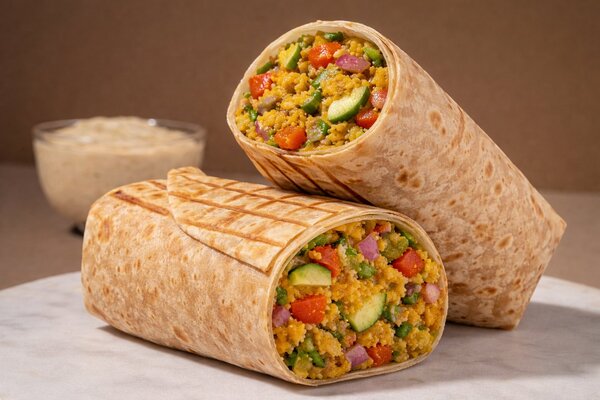
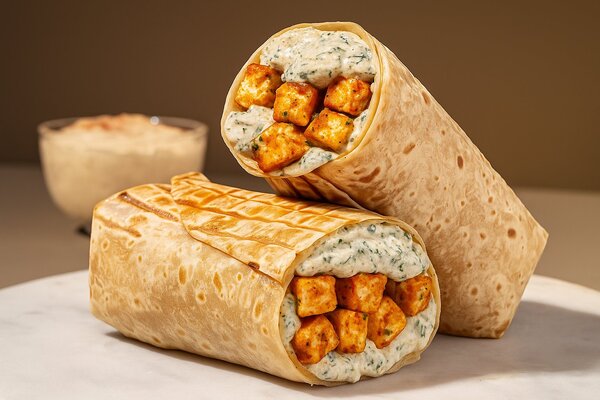
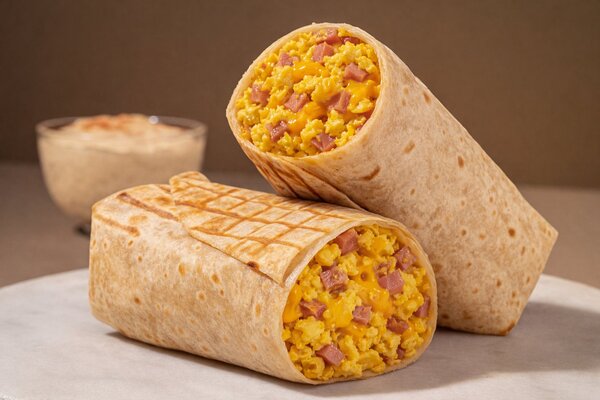
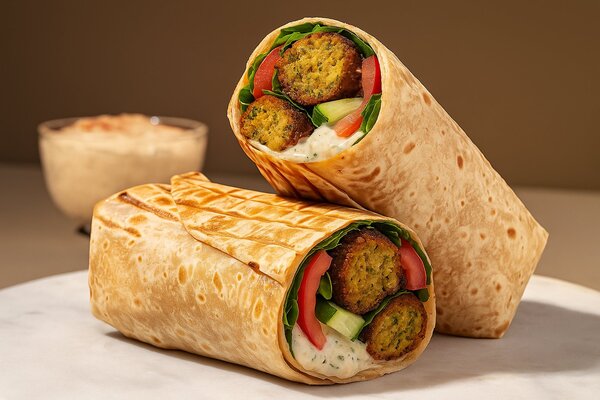
Morning prep window (9:00 - 11:00 AM): Every spread, every sauce, every chopped vegetable is prepared fresh. Hummus, tzatziki, green chutney, chipotle mayo — all made from scratch that morning. Vegetables are washed, cut, and portioned into containers. Proteins are marinated. Nothing from yesterday carries over.
The 12-minute promise: From the moment an order hits our system to the moment it's packaged and ready for pickup — 12 minutes maximum. We've timed it. We've broken it down second by second. Here's how it works:
⏱ The 12-Minute SOP
0:00 - 0:30: Order received. Kitchen display shows the wrap type, any customisations.
0:30 - 2:00: Tortilla goes on the grill. Filling ingredients are pulled from the day's prep station.
2:00 - 5:00: Protein or filling cooked/heated. Sauces portioned. This is the only step that involves actual cooking — and because we're working with small portions and high heat, it's fast.
5:00 - 7:00: Assembly. Tortilla off the grill, sauce spread, filling added, fresh vegetables layered, wrap rolled and pressed.
7:00 - 9:00: Wrap cut, inspected, wrapped in foil and branded paper.
9:00 - 12:00: Packaged into delivery bag. Order tagged. Ready for pickup.
Twelve minutes. No freezer. No reheating. No microwave. The wrap that arrives at your door was literally raw ingredients 12 minutes before the delivery partner picked it up.
What nearly broke us
I'll be honest — the first three months were brutal.
Waste was horrifying. Without a freezer, anything we prepped in the morning that didn't sell by evening was gone. We couldn't freeze it for tomorrow. We couldn't repurpose it. It went in the bin. In our early weeks, we were throwing away 20-30% of our morning prep. That's real money — ingredients, labour, time — straight into the garbage.
Rush hours exposed every weakness. At 1 PM, when 15 orders hit simultaneously, a freezer kitchen just reheats and ships. We had to actually cook 15 wraps from scratch in real time. Our KPT spiked to 22-25 minutes. Zomato's algorithm pushed us down in search rankings. Orders dropped further. It was a vicious cycle.
Nobody believed us. When we told customers "everything is made fresh, we don't have a freezer," they nodded politely and assumed we were lying. Because every food brand says "fresh." The word has been so diluted by marketing that it means nothing anymore. We had no way to prove it except through the food itself.
How we solved it
Demand forecasting. After three months of data, we built a simple forecasting system. Monday through Friday, we know roughly how many orders to expect per hour, per day. We prep for that number plus a 15% buffer. Our waste dropped from 30% to under 8%. That's still higher than a freezer kitchen (which wastes almost nothing because everything's frozen), but it's sustainable.
Smaller, faster batches. Instead of one big morning prep, we do two. A main prep at 9 AM for the lunch rush, and a smaller "top-up" prep at 3 PM for evening orders. This means our evening wraps are made with ingredients that were prepped 2-3 hours ago, not 8 hours ago.
We got faster. Practice. Repetition. Muscle memory. Our kitchen team can now do what took 18 minutes in month one in under 11 minutes today. Our current average KPT on Zomato is 15-17 minutes — competitive with freezer kitchens, but with food that's incomparably fresher.
The food proved it for us. This is the part I'm most proud of. We never ran a marketing campaign about "no freezer" or "made fresh." We didn't need to. Customers tasted the difference. Our repeat rate climbed. Our ratings stabilised above 4.0. People started leaving reviews saying things like "this actually tastes homemade" and "you can tell it's not sitting around pre-made." The food did the marketing.
What "no freezer" really means
It means we can't scale the lazy way. We can't batch-cook 200 portions of soy keema on Monday and serve it all week. We can't buy frozen vegetables in bulk and pretend they're fresh. We can't make sauces once a month and keep them in cold storage.
Every single day, our kitchen starts from zero. The same vegetables get cut. The same spreads get made. The same proteins get prepped. It's Groundhog Day, and that's the point. Because when you eat a Happy Ratio wrap on Friday, it should taste exactly as good as the one you had on Monday — because it was made with the same care, the same process, and ingredients that are equally fresh.
A freezer isn't just a machine. It's a philosophy. It says "good enough today is good enough tomorrow." We decided that wasn't good enough for us. And once we proved it could work, it became the thing that makes us different from every other delivery kitchen in Gurgaon.
Do I recommend this approach to other food entrepreneurs? Honestly, no — not unless you're willing to eat the waste costs, build insanely tight SOPs, and accept that your first few months will be painful. But if you're the kind of person who tastes the difference between fresh tzatziki and the stuff that's been sitting in a fridge for three days, then you already understand why we did it.
We don't own a freezer. And at this point, we never will.
Taste what fresh actually means
Every wrap made from scratch, in under 12 minutes, with zero frozen ingredients.